


When reading the Word of God, commonly referred to as the Scriptures and/or the Bible we soon find that there is a “COMING ONE” frequently written of throughout the pages of this historical document. This “Coming One” is identified as Jesus the Christ, or in the Hebrew language Yashua ha Mashiach, from Nazareth.
It is the purpose of this article to examine from three points of view who Jesus was . . . and is. Those three views are from the view of those closest to Him during His Life, from the Scriptures themselves, and from Jesus Himself.
Who do men say that I am ?
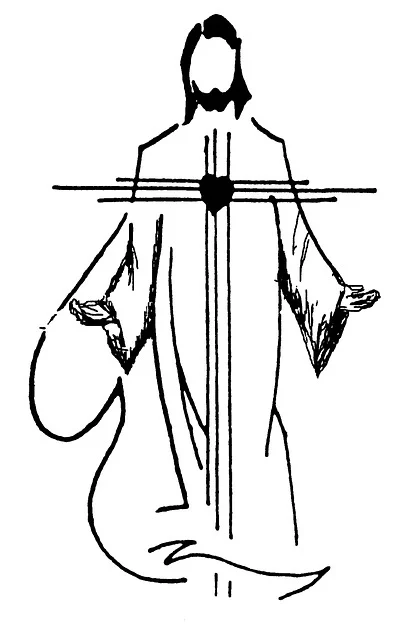
Matthew 16 -NKJV
(13) When Jesus came into the region of Caesarea Philippi, He asked His disciples, saying, “Who do men say that I, the Son of Man, am?”
INTRODUCTION . . .
A historical charismatic Man, Jesus of Nazareth, who lived and died some two thousand years ago asks two questions of His Disciples (followers). The first question that Jesus (or Yashua, his Hebraic name) asked was:
Who do men say that I am?
The responses and follow-up question are priceless as we seek to learn how those closest to Him replied to this relevant request.
We need to appreciate the importance of this probe into the identity of Jesus of Nazareth. From historical records we can confirm His existence and verify that death by crucifixion under Roman occupation in Israel/Judah did occur.
What we are most interested in is to verify what the testimonies of both witnesses and various Biblical writers provide to us about Jesus of Nazareth.
Providentially, this information can be found in the common Bible which most people already possess in their homes today. This will be the primary source we will use in our investigation.
We will use the New King James version of the Bible.
TO WHOM IS JESUS ASKING THESE QUESTIONS ?
Luke 6
(12) Now it came to pass in those days that He went out to the mountain to pray, and continued all night in prayer to God.
(13) And when it was day, He called His disciples to Himself; and from them He chose twelve whom He also named apostles:
(14) Simon, whom He also named Peter, and Andrew his brother; James and John; Philip and Bartholomew;
(15) Matthew and Thomas; James the son of Alphaeus, and Simon called the Zealot;
(16) Judas the son of James, and Judas Iscariot who also became a traitor.
The Disciples of Jesus !
Jesus of Nazareth had many followers besides the twelve disciples whom He also named Apostles. Frequently, the writers of Biblical books when using the word disciples a “multitude” of the followers of Jesus are those that are referred to.
However, also frequently, when the word disciples is used, He is addressing the “twelve” disciples/apostles and are only addressing the twelve. These men were His “inner circle”, His closest allies, whom He took into His confidence, communicating with them on a regular basis.
In the Book of Acts chapter 1, the disciples of Jesus are numbered at 120. And the 2nd chapter of the same book tells us that 2000 souls were added to “the church/congregation” that day.
One must examine the context of the Biblical passage to understand to who/whom is referred to.
FURTHERMORE . . . In order to grasp what the question that Jesus/Yashua is asking and to whom He is asking the question of we must pay attention to both the context and the content of the words that are recorded in this conversation.
Acts 1
(15) And in those days Peter stood up in the midst of the disciples (altogether the number of names was about a hundred and twenty), and said . . .
Acts 2
(41) Then those who gladly received his word were baptized; and that day about three thousand souls were added to them.
TO WHOM IS JESUS ASKING THIS QUESTION . . .
Jesus of Nazareth had many followers besides the twelve disciples whom He also named Apostles. Frequently, the writers of Biblical books when using the word disciples a “multitude” of the followers of Jesus are they that are referred to.
However, also frequently, when the word disciples is used, He is interacting with the “twelve” disciples/apostles and are only addressing the twelve. These men were His “inner circle”, His closest allies, whom He took into His confidence, communicating with them on a regular basis.
In the Book of Acts chapter 1, the disciples of Jesus are numbered at 120. And the 2nd chapter of the same book tells us that 2000 souls were added to “the church/congregation” that day.
One must examine the context of the Biblical passage to understand to who/whom is referred to.
FURTHERMORE . . . In order to grasp what We must pay attention to what Jesus/Yashua asked in His question to His Disciples. In this
THE DISCIPLES ANSWER JESUS . . .
Simon Peter, Andrew, James, John, Phillip, Bartholomew, Matthew, Thomas, James, Simon the Zealot, Judas of James, and Judas Iscariot; respond to Jesus’ question of: Who do men say that I, the Son of Man, am?
John the Baptist had just been beheaded (Matthew 14:8-12) . . . Elijah the prophet was taken up in a whirlwind (2Kings 2:11) . . . Jeremiah the Prophet was most likely stoned in Egypt (Jeremiah 32:1-3) . . . a Prophet like Moses (Deuteronomy 18:15)
Matthew 16
(14) So they said, “Some say John the Baptist, some Elijah, and others Jeremiah or one of the prophets.”
JESUS CHALLENGES THE DISCIPLES ANSWER . . .
Jesus did not initially reject the John, Elijah, Jeremiah, or one of the prophets answer which the disciples reported from the rumors which they were aware of . . . BUT . . . neither did he confirm that any or all of these were correct either ! Andrew, James, John, Phillip, Bartholomew, Matthew, Thomas, James, Simon the Zealot, Judas of James, and Judas Iscariot; respond to Jesus’ question of: Who do men say that I, the Son of Man, am?
John the Baptist had recentlly been beheaded (Matthew 14:8-12) . . . Elijah the prophet was taken up in a whirlwind (2Kings 2:11) . . . Jeremiah the Prophet was most likely stoned in Egypt (Jeremiah 32:1-3) . . . a Prophet like Moses (Deuteronomy 18:15)
Who do you say that I am ?
Matthew 16 -NKJV
(15) He said to them, “But who do you say that I am?”
ANOTHER QUESTION . . .
A historical charismatic Man, Jesus of Nazareth, who lived and died some two thousand years ago asks two questions of His Disciples (followers). The first question that Jesus (or Yashua, his Hebraic name) asked was:
Who do men say that I am?
The responses and follow-up question are priceless as we seek to learn how those closest to Him replied to this relevant request.
We need to appreciate the importance of this probe into the identity of Jesus of Nazareth. From historical records we can confirm His existence and verify that death by crucifixion under Roman occupation in Israel/Judah did occur.
What we are most interested in is to verify what the testimonies of both witnesses and various Biblical writers provide to us about Jesus of Nazareth.
Providentially, this information can be found in the common Bible which most people already possess in their homes today. This will be the primary source we will use in our investigation.
We will use the New King James version of the Bible.